
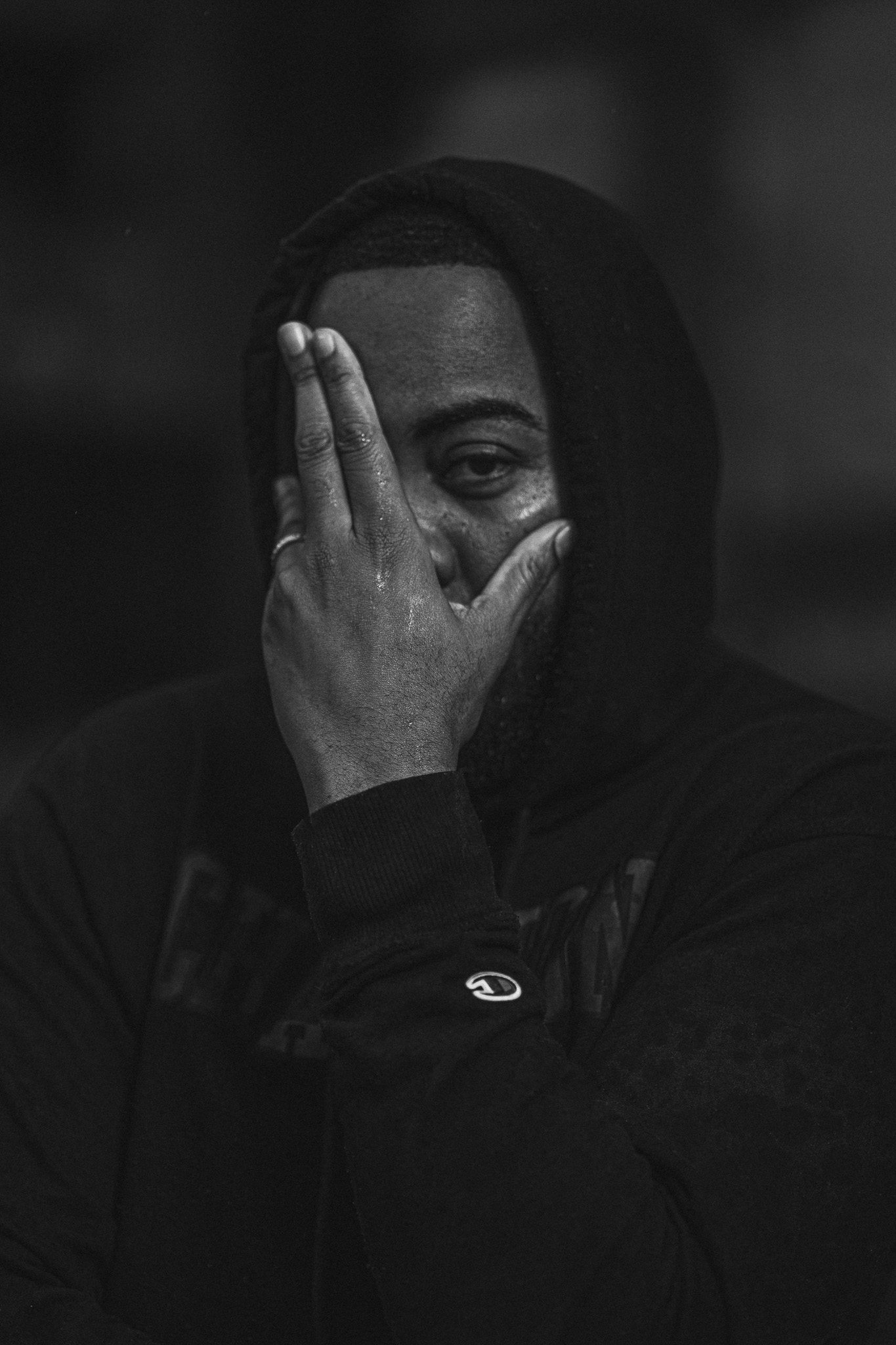
In Winston-Salem, North Carolina, hip-hop has always carried more than rhythm. It carries testimony. From the soulful production legacy of 9th Wonder to the emerging voices shaping the Piedmont Triad, the region’s culture has long blended introspection with grit. The Triad has never been the loudest market in hip-hop, but it has consistently been one of the most thoughtful.
Conversations w/Woo Interview: “Therapy Session with Winston-Salem, NC Hip hop Artist – Burch Boy”
Today, the broader Triad – Winston-Salem and neighboring Greensboro is home to a growing modern rap scene. Artists like Tia Corine, recognized in the 2023 XXL Freshman class, represent Winston-Salem’s expanding national presence. In Greensboro, artists such as J.K. The Reaper, Kenny Wavinson, and Griot Noy contribute to the region’s evolving, gritty sound. Winston-Salem’s own D.L. Cordero continues to blur genre lines.
The Triad’s sound is diverse, melodic yet raw, experimental yet rooted in Southern cadence. Some artists push energy and edge. Others lean into storytelling. Within that momentum, Burch Boy is carving out a lane that feels quieter and deeper.
His upcoming EP, #MCZID2 (My Comfort Zone Is Dead 2), documents a season where, as he explains a recent interview, “God… sat me down for a long time”
That sentence sets the tone for everything that follows.
ROOTED IN WINSTON-SALEM:

Before the growth, before the pause, before the project title carried spiritual weight, Burch Boy was simply a young man growing up in Winston-Salem.
His identity was shaped by the rhythm of the city — a place where Southern tradition meets evolving culture, where church influence and street reality often coexist in the same neighborhood. Like many young men raised in the Triad, he absorbed multiple worlds at once: faith and struggle, ambition and limitation, expectation and independence.
Winston-Salem is not Atlanta. It is not New York. It is not Los Angeles. It moves differently. Opportunities don’t always feel immediate. Visibility takes time. Respect is earned quietly.
That environment shaped Burch Boy’s character.
He learned early that identity is layered. That strength doesn’t always look loud. That survival sometimes means adapting rather than dominating.
In his interview, he reflects on how life responsibilities reshaped his mindset . But those responsibilities are rooted in the foundation built in Winston-Salem — community, faith influence, and a culture that values resilience.
Growing up in the Triad meant understanding that success might require leaving your comfort zone, emotionally and geographically, while still staying connected to your foundation. That tension is reflected in My Comfort Zone Is Dead 2. The title itself feels autobiographical: growth requires disruption.

His upbringing also explains why authenticity matters so deeply to him. In smaller cities like Winston-Salem, people know you beyond your persona. There’s little room to fabricate an image without being confronted by those who knew you before the spotlight.
That reality sharpened his commitment to truth.
When Burch Boy speaks about slowing down, about being spiritually redirected, about refusing to perform hardness that doesn’t match his life, it isn’t a marketing angle. It’s a reflection of where he comes from.
Winston-Salem shaped him — not into a caricature of toughness, but into a man learning how to integrate faith, fatherhood, and artistry without losing himself in the process.
And in that sense, the city isn’t just his backdrop.
It’s his anchor.
A FORCED PAUSE THAT CHANGED EVERYTHING:
Burch Boy’s first EP, #MCZID (My Comfort Zone Is Dead) arrived during the uncertainty of the 2020 Covid-19 pandemic, a period defined by urgency, output, and emotional volatility. Creativity thrived in isolation. But as life reopened, reality shifted.
“Life in general… I’ve got a family now… trying to make ends meet,” he says
Marriage brought maturity. Fatherhood brought responsibility. Financial pressure replaced artistic momentum as the dominant concern. Streams no longer outweighed stability. Then came the halt.
“Anything you feel like you can do… He (referring to God) shut it off,” Burch Boy recalls.
Momentum faded. Plans stalled. Doors felt closed. Instead of forcing outcomes, he found himself alone, late at night in the gym, praying, thinking, wrestling internally
“It was very humbling,” he says.
In hip-hop culture, humility is rarely glamorized. The genre often rewards assertiveness, visibility, forward motion. Yet, Burch Boy’s growth came through stillness. He describes a season where ambition had to be surrendered before clarity returned. That pause did not silence him. It refined him.
WALKING THE “THIN LINE” BETWEEN STRENGTH AND VULNERABILITY:
Burch Boy’s willingness to speak openly about mental strain and spiritual recalibration places him inside a larger hip-hop conversation, one that Winston-Salem’s own 9th Wonder addressed years earlier.
In a 2017 interview with DJBooth, 9th Wonder spoke about the “thin line” rappers walk when expressing emotion in a culture that often equates vulnerability with weakness. He challenged the idea that toughness requires emotional suppression, arguing instead that honesty deepens the art form rather than diminishes it.
That framing sharpens the context around Burch Boy’s message.
When Burch Boy says, “Being authentic is never pressure”, he is stepping directly onto that same thin line, choosing transparency over performance. When he admits that men often stay silent even when they are struggling reinforces the cultural tension 9th Wonder described.
What 9th Wonder articulated theoretically, Burch Boy embodies practically.
His pause. His confession. His integration of therapy and faith. His refusal to perform hardness for image’s sake. All of it expands the definition of strength in Triad hip-hop.
In a genre that once measured masculinity by armor, Burch Boy, like 9th Wonder before him, is proving that authenticity may be the sharper edge.
HIP-HOP’S MENTAL HEALTH SHIFT:
Burch Boy’s journey mirrors a measurable transformation within rap itself. One of the most cited studies on the subject analyzed the top 25 Billboard year-end rap songs in 1998 and compared them to 2018. These findings from the National Library of Medicine’s findings reveal a striking increase in mental health references.

The late 1990s prioritized dominance, bravado, and survival without emotional disclosure. By 2018, artists were openly naming anxiety, depression, and internal conflict. Vulnerability became part of the mainstream conversation.
While the most rigorous rap-specific data ends in 2018, broader research shows popular music lyrics overall have continued trending toward stress-related themes through 2023. The language of pressure, burnout, and emotional strain has not receded.
Within that shift, Burch Boy’s words feel aligned rather than isolated.
“A lot of us men don’t say when we’re not okay… we go to sleep and might not wake up because of that,” he says
His transparency reflects not only personal maturity but a cultural recalibration, especially among Black men navigating responsibility, identity, and faith.
MASCULINITY WITHOUT THE MASK:

Hip-hop has long equated masculinity with endurance. Silence. Toughness. But Burch Boy refuses to perform strength that doesn’t match his lived reality.
“Being authentic is never pressure,” he explains
Fatherhood reframed his creative lens. “If I did drill music and came home to my kids like that, how would that look?” he asks
That question reveals an internal audit. He is no longer creating solely for reaction. He is creating for legacy. Masculinity, for him, includes vulnerability. It includes slowing down. It includes spiritual surrender. This perspective echoes conversations long championed by 9th Wonder, who has publicly challenged the emotional policing embedded in rap culture. By questioning why vulnerability is labeled weakness, he helped open space for transparency within Southern hip-hop. In the Triad, that shift is not theoretical. It is lived. Artists are reconsidering what strength looks like. They are balancing grit with reflection, ambition with awareness. Burch Boy contributes to that recalibration not by condemning traditional hip-hop narratives, but by expanding them.
A COMMUNITY CHANGED BY LOSS:

The Triad understands what happens when silence goes too far.
In 2020, 16-year-old rising Winston-Salem artist SauxePaxk TB died from a drug overdose just as his “Ballin” challenge was gaining traction. His passing shook the local scene. Celebration turned to mourning. A mural now stands in his honor.
That loss forced difficult reflection across the community.
Hip-hop often glorifies hustle and image. But SauxePaxk TB’s death exposed the emotional weight beneath ambition, the pressure young artists carry before they have the language or support systems to process it. His story became a reminder that talent does not shield anyone from internal struggle.
Against that backdrop, Burch Boy’s testimony of being spiritually “sat down” feels significant. It represents interruption before destruction. Reflection before collapse.
The contrast between silence and confession becomes clearer when tragedy is fresh in memory.
MUSIC AS THERAPY, NOT PERFORMANCE:
“For me, it can be therapy,” Burch Boy says
When he cannot vent verbally, he processes through music. Expression becomes release. The studio becomes a space of confession rather than performance. His release in the studio now becomes his stage! His followers are no longer just a number, they’re not just a stream! They become one with his journey. They share a common moment.
“They’re not going to feel alone,” he says
Licensed Clinical Professional Counselor Victoria Swift explains that, narrative therapy encourages individuals to separate themselves from their problems and reframe their personal stories. Narrative therapy emphasizes the healing power of storytelling and meaning-making.
“One of the greatest things about hip hop is to have that voice… we can relate to the everyday man,” Swift says
Research also supports music’s role in identity formation and emotional regulation. A peer-reviewed study from the Scottish Journal of Music Education, notes that popular music provides a framework for processing internal conflict and constructing self-understanding.
Listen to the Full interview with Victoria Swift LCPC/Psychotherapist Here:
Hip-hop becomes more than entertainment. It becomes narrative restructuring. It transforms internal chaos into organized language.
For Burch Boy, that transformation is personal. Writing becomes introspection. Recording becomes clarity.
FAITH WITHOUT APOLOGY:

Burch Boy admits there was a time when spirituality in hip-hop felt corny. Growth changed that perception.
“At one point I didn’t want to hear none of that (referring to gospel music), we wanted to listen to artist like Gucci Mane & Jeezy. I learned over time that, authenticity will touch anything. That’s why I can listen to Kirk Franklin today” he says. The pivot happened, he became unapologetic about his faith in God.
Burch Boy’s fusion of faith and contemporary hip-hop reflects a broader cultural shift toward positive mental health and spiritually grounded music that feels honest rather than performative. In a June 2021 Pulse of Entertainment feature, which noted how artists like hip-hop gospel performer Jor’Dan Armstrong use modern production to “brag on how good God is,” reframing spirituality in a way that remains culturally relevant. It also aligns with Burch’s quiet self-confidence, he doesn’t feel the need to conform in order to be accepted. Faith, for him, is no longer aesthetic, it is functional.
“I just pray… I don’t stress, I don’t worry anymore,” he shares
Prayer becomes regulation. Instead of forcing outcomes, he releases pressure. Instead of spiraling in frustration, he pauses spiritually. But growth also requires honesty. He refuses to separate spiritual grounding from professional support.
“Go to therapy. See God,” he urges
In that statement, he collapses a false divide. Faith and counseling are not competing paths; they are complementary tools. In a genre where vulnerability once required disclaimers, Burch Boy offers none.
REDEFINING THE SOUND OF THE TRIAD:
Music Video: Burch Boy – Don’t Dim the Lights
The Triad’s hip-hop scene is expanding, louder, more visible, more experimental. But alongside that growth is a quieter revolution rooted in emotional transparency.
From 9th Wonder’s challenge to emotional stigma, to the painful reminder of what happens when struggle remains unspoken, to Burch Boy’s testimony of spiritual interruption, the Piedmont Triad is shaping more than a sound. It is shaping a conversation!
My Comfort Zone Is Dead 2 is not about chasing relevance. It is about documenting transformation, as a man, as a father, as an artist. When asked to leave listeners with encouragement, Burch Boy keeps it simple:
“Keep going. Believe in yourself. Stay authentic. Trust God. Trust the process”
In a region known for grit, Burch Boy is proving that stillness can be just as powerful. And in a genre that once demanded armor, he is showing that transparency may be the strongest posture of all.


Leave a Reply